

How to Find the Best GEO Agency for Your Brand in 2026


.png)

Half of all consumers now use AI-powered search, according to HubSpot's 2026 State of Marketing report. For businesses across Belgium and beyond, this shift means one thing: if your brand is not cited in answers generated by ChatGPT, Gemini, Perplexity, or Google AI Overviews, you are losing ground to competitors who are. Finding the best GEO agency is no longer optional; it is a strategic imperative for any organisation that depends on digital visibility.
Generative Engine Optimization (GEO) is the discipline of making your brand the answer AI chooses. Unlike traditional SEO, which focuses on ranking in search results, GEO focuses on earning citations within AI-generated responses. If you are exploring our GEO digital agency services, you already understand the urgency. This article will equip you with the criteria, market context, and practical frameworks you need to select a partner who delivers measurable, lasting results.
Why GEO Has Become a Business Priority in 2026
The numbers are unambiguous. The GEO services market is projected to grow from USD 1.48 billion in 2026 to USD 17.02 billion by 2034, exhibiting a CAGR of 45.5%. This trajectory reflects a fundamental change in how buyers discover, evaluate, and choose brands. 44% of AI search users say it is their primary source for product discovery, ahead of traditional search (31%), retailer websites (9%), and review sites (6%).
For Belgian enterprises and mid-market companies, the consequences are direct. By early 2026, most enterprise marketing teams have a GEO initiative, while most SMB and mid-market teams have not started, which represents a compounding first-mover advantage given that citation authority, like domain authority before it, accumulates over time. Waiting means falling further behind every month.
What Defines a Top-Tier GEO Agency
Not every agency claiming GEO expertise delivers the same depth. A truly effective generative engine optimisation partner must demonstrate capabilities across four pillars.
1. Diagnostic and Audit Capability
Any serious engagement should begin with a comprehensive GEO audit that maps how your brand currently appears (or does not appear) across major AI platforms. This diagnostic should reveal citation gaps, competitor positioning, and content readiness.
2. Structured Content and Authority Engineering
Effective GEO relies on extractable, verifiable content: clear claims backed by structured data and authoritative sources to improve citation rates across multi-turn interactions. The agency must be capable of restructuring your existing content library and producing new material designed to be cited, not merely indexed.
3. Third-Party Signal Building
The brands seeing the strongest results in GEO are those that produce comprehensive, well-structured, data-rich content, maintain consistent freshness cycles, and build brand presence across the third-party sources that AI platforms actually cite. A credible agency will manage entity consistency, external mentions, and digital authority across platforms that LLMs trust.
4. Continuous Monitoring and Correction
GEO is not a one-time project. The brands that built monitoring into their GEO workflow in 2025 are detecting and correcting errors in two weeks; those that have not are discovering them, if at all, after two months of compounding damage. Your agency must provide ongoing tracking of mentions, citations, and narrative framing across AI responses.
Key Criteria When Evaluating a GEO Partner
Before signing with any provider, run through this checklist. The right partner should satisfy every point; a weak showing on more than one is a warning sign.
- Exclusive or deep GEO specialisation: Agencies adding GEO as a side offering to legacy SEO packages rarely possess the methodology depth required. Look for a dedicated AI search optimisation framework.
- Structured methodology: A clear, repeatable process (audit, execution, optimisation) indicates maturity. Vague promises of "getting you into ChatGPT" do not.
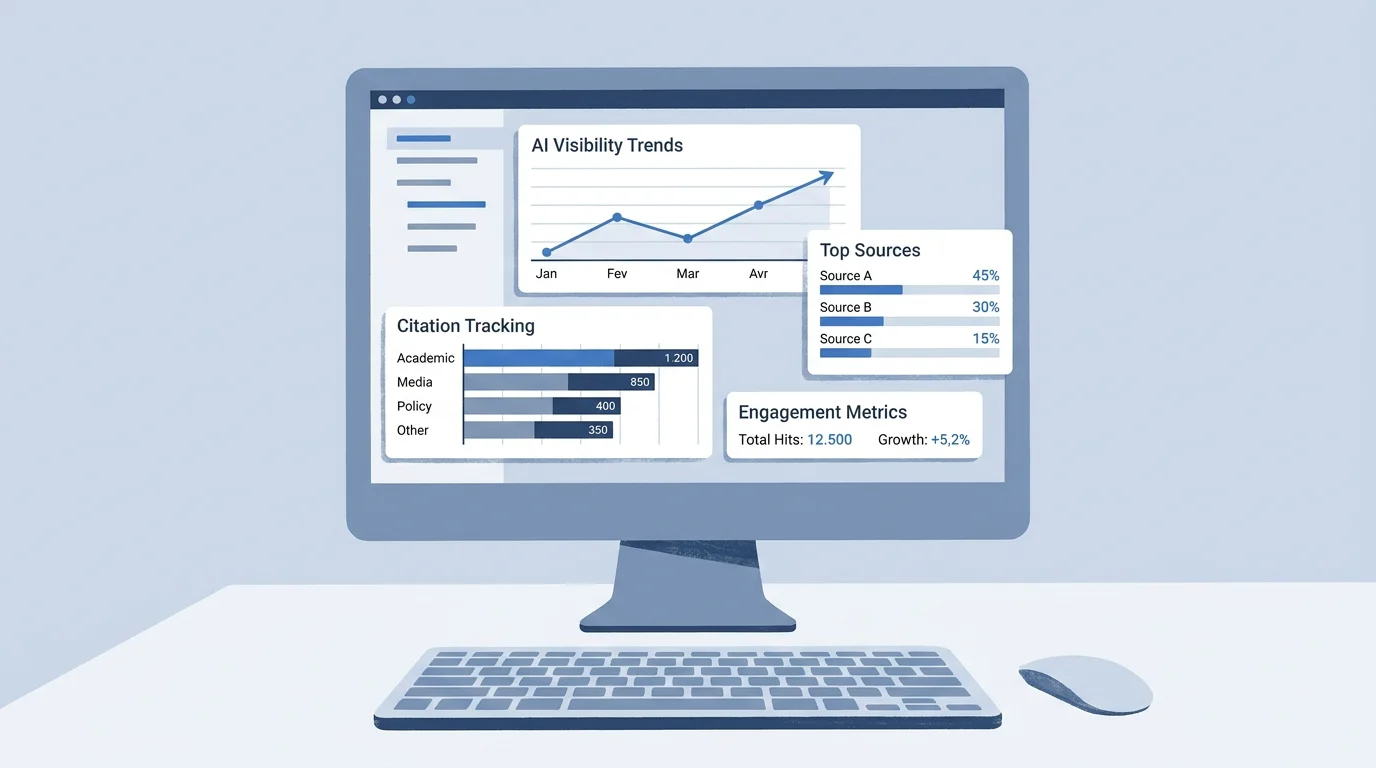
- Transparent reporting: Demand a dashboard tracking citation frequency, brand framing accuracy, and competitive share of voice in AI responses.
- Verifiable case evidence: Ask for documented outcomes (citation lifts, traffic from AI referrals, lead attribution). The 54% plan vs. 23% measurement gap is the defining GEO maturity challenge in 2026, so agencies that measure rigorously stand apart.
- Long-term engagement model: GEO results compound over time. Agencies offering only one-off projects will not deliver sustainable visibility.
Understanding what GEO is at a foundational level will also help you ask sharper questions during your evaluation process.
The Execution Gap: Why Most Brands Are Not Yet Optimising
92% of marketers plan to optimise for AI search, but only 40.6% are currently doing so. This gap represents both a risk and an opportunity. Brands that act now build citation authority that competitors will struggle to replicate later. The window for first-mover advantage is narrowing, especially in competitive verticals such as technology, financial services, and healthcare.
Part of the hesitation stems from measurement complexity. GEO ROI is structurally harder to measure than SEO because zero-click AI answers generate no referral sessions, and shortlist influence, the most commercially valuable AI impact, happens before any trackable touchpoint. This is precisely why working with a specialised agency matters: you need a partner with proprietary tools and proven attribution frameworks, not an agency learning on your budget. To understand the financial case in depth, explore our guide to the ROI of GEO in 2026.
How a GEO Agency Differs from a Traditional SEO Agency
Many organisations assume their current SEO provider can handle GEO. The disciplines share DNA, but the operational differences are significant.
| Dimension | Traditional SEO Agency | Specialised GEO Agency (e.g., Ping Prime) |
|---|---|---|
| Primary goal | Rankings on search engine results pages | Citations and recommendations in AI-generated answers |
| Content approach | Keyword-optimised pages | Extractable, verifiable, structured content with authority signals |
| Off-page strategy | Backlink acquisition | Entity consistency, third-party mention engineering, narrative governance |
| Monitoring | Rank tracking, traffic analytics | Citation tracking, framing analysis, AI response monitoring |
| Reporting KPIs | Organic traffic, keyword positions | AI visibility score, citation rate, brand authority index |
Generative Engine Optimization services are transforming search optimisation by shifting focus from traditional ranking strategies to securing "answer real estate" in AI-generated responses. An agency that treats GEO as an add-on to its SEO retainer will almost certainly underinvest in the citation engineering and narrative monitoring that drive results.

What the Right Engagement Model Looks Like
GEO is a continuous discipline, not a campaign. The best agencies structure engagements in three phases.
- Identify: Audit your current AI footprint, analyse how generative engines discuss your market and competitors, and establish a baseline visibility score.
- Do: Execute on content restructuring, authority signal creation, structured data implementation, and third-party mention strategies to make your brand detectable, credible, and citable.
- Optimise: Install a governance loop with monthly reporting, citation monitoring, and iterative content refinement to maintain narrative integrity as AI models evolve.
This phased approach ensures that every action is grounded in data and that results compound month after month. It also provides clear accountability at each stage, so you always know what is being done and why.
Red Flags to Watch for When Choosing an Agency
The GEO market is still maturing. The GEO market is where SEO was in 2005: early, fragmented, and full of opportunity. That also means it is full of unproven providers. Watch for these warning signs:
- Guaranteed placements: No agency can guarantee a specific AI will cite your brand. LLM outputs are probabilistic, not deterministic.
- No monitoring capability: If an agency cannot track citations across at least ChatGPT, Gemini, Perplexity, and Google AI Overviews, it lacks essential infrastructure.
- One-off project framing: GEO requires ongoing content development, external mention management, and response monitoring. A single audit or content sprint is insufficient.
- Opaque methodology: If the agency cannot explain its process clearly, it likely does not have one.
- No distinction from SEO: An agency that positions GEO as "just better SEO" misunderstands the discipline. The content architecture, the authority signals, and the measurement frameworks are fundamentally different.
Why Belgian Brands Should Act Now
Belgium's multilingual, cross-border business environment makes GEO both more complex and more rewarding. Brands operating in Dutch, French, and English must ensure consistent entity representation across languages and markets. AI models draw from diverse sources, and inconsistencies in brand messaging across language versions can dilute citation authority.
The data from 2026 is unambiguous: AI search traffic is more valuable (4.4x), converts better (3x), and is growing at 527% year-over-year. For Belgian companies competing in European and global markets, the question is not whether to invest in GEO, but how quickly you can secure a credible partner. Understanding how to choose the right GEO marketing agency is the first step in that process.
The best agency for generative engine optimisation is one that combines deep AI search expertise, a structured methodology, transparent measurement, and the commitment to long-term partnership your brand requires. With over 25 years of experience in digital strategy and an exclusive focus on GEO, we built our Identify, Do, Optimise framework specifically to help mid-market and enterprise organisations become the answer AI chooses. Our monthly Visibility and Authority dashboard ensures you always see exactly where your brand stands and where it is heading.
If you are ready to take control of how AI engines represent your brand, request our comprehensive GEO audit and start building citation authority today.
Frequently Asked Questions
What does a GEO agency do differently from an SEO agency?
A GEO agency focuses on making your brand citable within AI-generated answers, not just visible on search engine results pages. This involves structured content creation, authority signal engineering, entity consistency across platforms, and continuous monitoring of how AI models frame your brand. At Ping Prime, our Identify, Do, Optimise methodology addresses each of these layers systematically.
How long does it take to see results from GEO?
Initial brand mentions in AI responses can appear within weeks of implementation. However, sustained citation authority requires consistent effort over several months, similar to how domain authority builds in SEO. The compounding nature of GEO means early action delivers disproportionate long-term returns.
Is GEO relevant for businesses operating primarily in Belgium?
Absolutely. Belgian businesses face the added complexity of multilingual markets, making entity consistency across Dutch, French, and English critical. AI models draw from all language sources, so a coordinated GEO strategy ensures your brand is accurately and favourably represented regardless of which language a user queries in.
.svg)
