

What is GEO? The complete guide for marketers in 2026
.webp)


.png)

GEO (Generative Engine Optimization) is the discipline of optimizing a brand, its content and its sources to be understood, remembered and cited by generative search engines such as ChatGPT, Google AI Overviews, Perplexity, Claude or Gemini. Where SEO works to rank a page among ten blue links, GEO aims to make your brand citable in the single answer AI will offer the user.
In Belgium, 67% of adults already use generative AI and 36% have made a purchase decision based solely on an AI recommendation (Semactic & PingPrime study, November 2025). The visibility playing field has shifted. This guide explains what GEO is, how it works, how it differs from SEO, and where to start to become a source AI recommends in 2026.
The bottom line
- GEO is the optimization of a brand's visibility in answers generated by AI engines (ChatGPT, AI Overviews, Perplexity, Claude).
- Applying GEO techniques can boost visibility in generative engines by an average of +40% according to the Princeton researchers who originated the concept (Aggarwal et al., KDD 2024).
- The three most effective levers: adding citations (+37%), statistics (+22%) and quotations in content.
- GEO does not replace SEO, it layers on top: the same page can rank well on Google and be cited by ChatGPT, but it requires a different editorial structure.
What exactly is GEO?
Generative Engine Optimization is defined by researchers at Princeton, Georgia Tech, Allen AI and IIT Delhi in their founding paper published in November 2023 and presented at KDD 2024 as "a new content optimization paradigm where creators adjust their content to be visible in answers from generative engines" (Aggarwal et al., 2023). Concretely, it is the set of practices that make a brand extractable and citable by a large language model (LLM) when composing an answer.
The term "GEO" coexists with other acronyms used since 2024 in the marketing community: AEO (Answer Engine Optimization), AIO (AI Optimization), LLMO (LLM Optimization) and SGE Optimization (for Search Generative Experience). These terms broadly cover the same goal: adapting brand content and presence to a search mode where the synthesized answer replaces the list of links.
Why does GEO exist? Because user search behavior is changing. On Google, the zero-click rate jumped from 56% to 69% in one year after the rollout of AI Overviews (SimilarWeb, July 2025). The user gets a direct answer at the top of the page and no longer needs to visit a site. For brands, this means being on Google's first page is no longer enough: you need to be present in the answer itself.
Our field reading. Across the 25+ brands we support in Belgium and Europe, we observe that half of GEO audits reveal "invisible" traffic: content appears in sources cited by ChatGPT or Perplexity without the brand knowing, due to a lack of adapted monitoring tools. That missing signal is what makes GEO so strategic in 2026.
To dig deeper into the full vocabulary of the field, see our GEO glossary or our dedicated article on essential GEO terms to master.
Why has GEO become indispensable in 2026?
Three numbers summarize the shift. Gartner predicts a 25% drop in traditional search volume by the end of 2026 (Gartner, February 2024). In parallel, ChatGPT passed 800 million weekly users in October 2025 (Sam Altman announcement, DevDay 2025) and Perplexity processes 780 million queries per month (Perplexity, May 2025). Search is being redistributed.
The direct impact is already measurable. Seer Interactive's September 2025 study, run on 3,119 informational queries and 25 million impressions, shows a 61% drop in organic CTR on queries displaying an AI Overview, and a 68% drop in paid CTR (Search Engine Land, Seer Interactive, 2025). On queries without AIO, organic CTR also drops 41% - proof that user behavior has globally changed, AIO or not.
Sources: Eurostat (Dec. 2025), Semactic & PingPrime (Nov. 2025), Deloitte Belgium (2025).
For Belgian brands, the signal is even stronger. The Semactic & PingPrime study run by IntoTheMinds across 1,000 Belgians shows that 76% of 18-34 year-olds use AI regularly and that 69% of Belgians say they trust AI answers. When your customer queries ChatGPT to compare three providers, what AI says about your brand carries as much weight - if not more - than what your site says.
To go further on the figures and their business implications, see our analysis of the decline in organic traffic in 2026.
How does GEO work in practice?
GEO rests on a three-step mechanism every marketer should understand. A 2025 AirOps study shows that adding citations to content boosts its AI visibility by 37% and that adding statistics boosts it by 22%, these two levers being the most powerful for becoming extractable (AirOps, 2025). Understanding these three steps means understanding how AI decides to cite your brand over another.
Step 1 - Retrieval. When a user asks ChatGPT or Perplexity a question, the engine often runs a real-time search via a mechanism called RAG (Retrieval-Augmented Generation). It queries web page indexes, selects around thirty candidate sources and ranks them by relevance and authority.
Step 2 - Extraction. The LLM then reads these sources and extracts the most useful passages to answer. This is where GEO plays out: content structured as short, factual, dated, sourced answers will be preferred over narrative, vague or unsourced content. The 40-to-80-word blocks that directly answer a question are the most extractable.
Step 3 - Synthesis and citation. The engine then generates the final answer and includes - or not - citations to the sources. On Perplexity and Google AI Overviews, these citations are visible and clickable. On ChatGPT and Claude, they can remain implicit. But in all cases, your brand can only be mentioned if it has been extracted, and is only extracted if it has been retrieved.
Our field observation. Across 12 audits run in Q1 2026, the pages most cited by LLMs shared four constant attributes: an H2 phrased as a question, a direct answer of under 80 words in the first paragraph of the section, at least one sourced statistic per H2, and consistent Schema.org markup. Purely "inspirational" pages were rarely cited.
To understand in detail how each AI chooses its sources, read our article How AI chooses its sources: mechanisms and strategies.
GEO vs SEO: what are the fundamental differences?
GEO does not replace SEO, it complements it. According to Bain & Company, 80% of users rely on AI summaries for at least 40% of their searches, but 60% of searches end without a click (Bain & Company, February 2025). This means that classic SEO remains vital for the 40% who still click - but GEO becomes essential to exist for the remaining 60%.
Here is how the two disciplines compare point by point:
- Criterion|Classic SEO|GEO (Generative Engine Optimization)
- Main goal|Appear in Google's 10 blue links|Be cited or mentioned in the AI-synthesized answer
- Unit of visibility|The page as a whole, ranked by keyword|The citable passage (40-80 words) extracted by the LLM
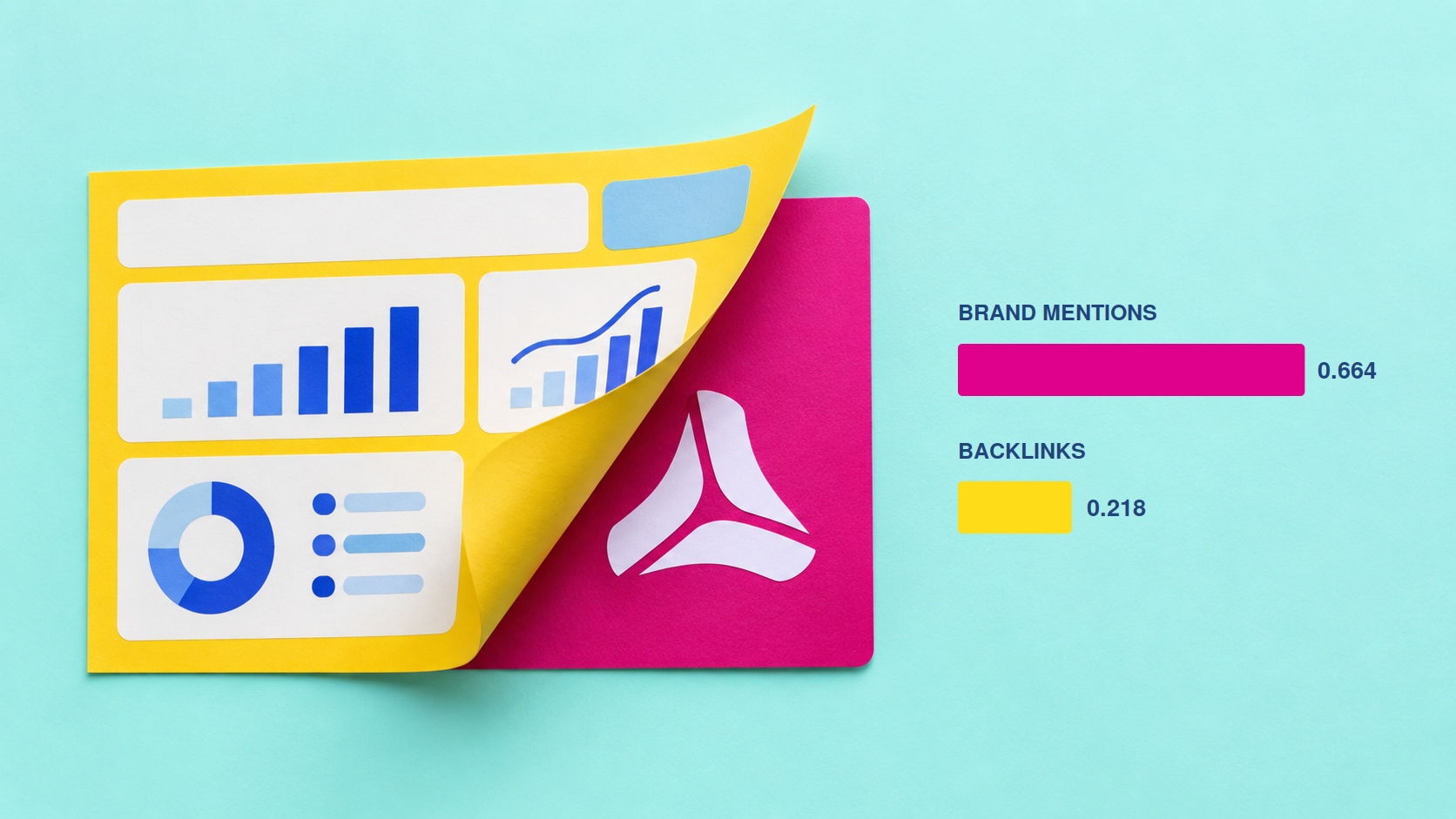
- Dominant authority signal|Backlinks, domain authority, age|Brand mentions on third-party sources, freshness, verifiability
- Winning format|Long-tail article rich in keywords|Direct, factual, Q&A-structured, dated, sourced answer
- Success metrics|SERP position, organic traffic, click-through rate|Share of Model, AI citations, brand mentions in answers
- Reference tools|Google Search Console, Semrush, Ahrefs|AI monitoring tools (Profound, Otterly, AthenaHQ, custom monitoring)
- Time horizon|3-6 months to move positions|Visible effects in 4-12 weeks, but strong citation volatility
- Target platforms|Google, Bing, DuckDuckGo|ChatGPT, Google AI Overviews, Perplexity, Claude, Gemini, AI Mode
For an in-depth comparison of the three disciplines (SEO, GEO and AEO), we published a dedicated guide: GEO vs SEO vs AEO: complete guide to your 2026 visibility.
Which GEO techniques actually work?
Princeton's academic study across 10,000 queries measured the impact of nine GEO techniques applied in a controlled environment. The verdict: authority techniques (citations, quotations, statistics) far outperform cosmetic techniques (rewriting, simplification, keywords) (Aggarwal et al., 2023). Here is the hierarchy validated by research, translated into concrete actions for 2026.
Source: Aggarwal, Murahari, Rajpurohit et al., GEO: Generative Engine Optimization, KDD 2024.
The three priority levers in 2026. They combine the strongest measured impact with the best editorial feasibility.
- Cite authoritative third-party sources on every strong claim. A study, a report, a barometer, an official press release. It is the #1 lever, and also the one most brands neglect.
- Insert figures with the source named and the date. LLMs prioritize extracting passages that contain verifiable data.
- Embed direct citations ("quotations") from experts, customers or executives. Blocks within quotes are prime extraction candidates.
To this we add three structural levers we systematically apply in our GEO support program at PingPrime: Q&A structuring with H2s phrased as questions, Schema.org markup (FAQPage, HowTo, Article, Organization) and freshness with visible update dates. For the technical detail of markup, see our complete Schema Markup guide for GEO.
Which AI platforms should you factor into your GEO?
Five platforms concentrate most of AI search in 2026. According to the 5W AI Citation Source Index, only 11% of domains are cited by both ChatGPT and Perplexity, which shows each platform has its own selection logic (5W Public Relations, 2026). A serious GEO strategy covers all five, but ranks them by your audience.
Google AI Overviews and AI Mode. AI Overviews now appear on nearly 48% of tracked queries on average, with peaks at 88% in health and 82% in B2B Tech (BrightEdge, 2025-2026). Google AI Mode rolled out in Belgium in October 2025 as part of an expansion to 40+ new countries and 35+ new languages (Google Blog, October 2025). It is priority #1 for most B2B and consumer brands in Belgium.
ChatGPT. With 800 million weekly users and SearchGPT integration, it is the most prescribing platform. It favors Wikipedia (~48% of sources cited in the top 10), established media and pages structured as Q&A. Our practical guide: How to appear in ChatGPT.
Perplexity. Natively "citation-first" platform, it systematically displays its sources. It favors Reddit (46.7% of citations), very recent content (less than 30 days = x3.2 more citations) and sites with rigorous schema. To position yourself there: How to appear in Perplexity.
Claude (Anthropic). Less prescribing in volume but influential in B2B and tech, Claude is mainly fed by established editorial sources and academic content. See How to appear in Claude AI.
Gemini and other integrated LLMs. Gemini powers AI Overviews and AI Mode but also Google Workspace. B2B usage is climbing fast. To watch in 2026.
Source: BrightEdge, AI Search 2025 Insights - Q4 2025 analysis.
To compare the three prescribing platforms in detail, read our dossier ChatGPT Search vs Google AI Overviews vs Perplexity.
What results to expect from GEO in 2026?
Brands investing in GEO measure three types of gains. According to Adobe Analytics, visitors from an AI source convert 31% better than other traffic sources, with a 33% lower bounce rate (Adobe Analytics, March 2025). And per Search Engine Land, ChatGPT referrers convert at 15.9%, versus 1.76% for organic Google - a 9-to-1 ratio (Search Engine Land, 2025). AI traffic is still low in volume, but its quality is exceptional.
Three key indicators to steer a serious GEO strategy:
- Share of Model - the share of times your brand is mentioned by LLMs across strategic queries in your category. It is the AI equivalent of "share of voice."
- Citation rate - how often your content is cited as a source by Perplexity, AI Overviews or ChatGPT (depending on platforms that surface citations).
- Qualified AI-referred traffic - visits from AI that end in a conversion (lead, purchase, contact). To measure in GA4 via referrers
chatgpt.com,perplexity.ai,claude.ai,copilot.microsoft.com, etc.
For a complete method and our performance benchmarks, see our guide GEO ROI: how to measure return on investment in 2026 and our dossier AI citation monitoring: complete guide.
How to start a GEO strategy in 2026?
An effective GEO strategy is built in five structuring steps. The main trap observed on brands starting out: rushing into content production without having mapped priority AI queries or audited the existing. According to our internal PingPrime data across 27 audits in 2025-2026, 68% of brand content is not extractable by LLMs due to inadequate structure - while in 80% of cases the topic is already well covered, just poorly presented.
Step 1 - Map priority AI queries. Identify the 50 to 200 questions your target customers actually ask ChatGPT, Perplexity or AI Overviews in your category. Test every query, note the brands mentioned, the cited sources, the tone of the answer.
Step 2 - Audit the existing. For every priority question, check whether you are already cited, whether the AI's answer is accurate, and whether your brand "framing" is correct. Our complete method: GEO audit: complete guide to evaluating your AI visibility.
Step 3 - Rewrite or create answer pages. Build a citable page per priority query: H2 as a question, answer in 60-80 words right at the first paragraph, sourced statistics, expert citations, Schema.org markup. That is what we call an Answer-First page.
Step 4 - Strengthen external authority signals. Get the brand mentioned on sources LLMs consult: Wikipedia, Reddit, specialized media, sector barometers, customer testimonials on trusted platforms. That is the strategic role of Digital PR in GEO.
Step 5 - Monitor and iterate. Set up monthly tracking of the 50-200 priority queries, measure Share of Model, adjust content based on what AI cites or ignores. Without monitoring, no steering.
If you start solo, our tools page gathers several free resources to audit your AI visibility. If you prefer guided support, our team offers a 12-week GEO sprint: see our support offer.
Frequently asked questions about GEO
Will GEO replace SEO?
No. SEO remains vital for the 40% of searches that still end in a click and for the measurable Google Search Console traffic. GEO layers on top to capture visibility in the synthesized answer and in the 60% of zero-click searches. According to Bain & Company, 80% of users rely on AI summaries for at least 40% of their queries - SEO and GEO are now two legs of the same visibility strategy.
How long does it take to see GEO results?
Faster than SEO. The first signals (appearance in cited sources, mentions in answers) show in 4 to 12 weeks after the rollout of Answer-First pages and the strengthening of external authority. But only 30% of cited brands remain stable from one run to the next (AirOps, 2025): steering must be monthly, not quarterly.
How much does a GEO strategy cost?
For a typical Belgian SMB, a starter GEO sprint represents an investment of EUR 8,000 to 25,000 over 3 months (audit, plan, rebuild of 10 to 30 priority pages, initial monitoring). For a large brand or a highly competitive sector, expect rather EUR 30,000 to 80,000. ROI is assessed on the quality of AI traffic, which converts up to 9 times better than organic Google traffic per Search Engine Land.
Which companies stand to gain the most from GEO?
B2B brands (AIO coverage 82% in B2B Tech), health (88%), education (83%) and restaurants (78%) are the most exposed in 2026 (BrightEdge, 2025). But also e-commerce, since 36% of Belgians have already bought on an AI recommendation (Semactic & PingPrime, 2025) and AI visitors convert +31% better according to Adobe.
Does GEO work in French and for Belgium too?
Yes, since the rollout of Google AI Mode in French, Dutch and German in October 2025 (covering Belgium), GEO levers fully operate on local queries. With 67% of Belgians using generative AI and 80% of young people having already seen an AI Overview, the Belgian market is as mature as the US. The French specificity (strict GDPR, AI Mode still excluded in France) further reinforces the value of the Belgian multilingual market.
Conclusion: GEO is no longer optional
GEO (Generative Engine Optimization) has, in 2026, become an essential component of any digital visibility strategy. The figures converge: 67% of Belgians use generative AI, 69% of Google searches end without a click, and GEO techniques can lift a brand's AI visibility by +40%. Refusing to invest in GEO means letting ChatGPT, Perplexity and Google AI decide alone what users will read about your brand.
The good news: the right levers are identified (citations, statistics, quotations, Q&A structure, external authority), measurable and compatible with your existing SEO. The roadmap is clear - it just needs to be executed with rigor and backed by monthly monitoring.
To go further, two resources: our State of GEO in 2026 giving trends and predictions, and our case studies page showing concretely how brands went from invisible to cited by AIs. If you want to discuss it with our team: contact PingPrime.


.svg)
