

Optimization for AI engines: complete guide for 2026
.webp)


.png)

AI engine optimization is the discipline of structuring a brand, its content, and its third-party sources to be retrieved, extracted, and cited by ChatGPT, Google AI Overviews, Perplexity, Claude and Gemini. It's the strategic evolution of classic SEO, triggered by a deep shift in search behavior: users no longer read ten blue links, they read one synthesized answer.
Three figures sum up the urgency. 80% of search users now rely on AI summaries for at least 40% of their queries (Bain & Company, 2025), Gartner anticipates a 25% drop in traditional search volume by the end of 2026 (Gartner, February 2024) and 67% of Belgians already use generative AI (Semactic & PingPrime, November 2025). Here's the complete strategic playbook for 2026.
Why has optimizing for AI engines become non-negotiable in 2026?
Because the mechanics of the click are collapsing. The rate of zero-click searches on Google rose from 56% to 69% in one year after the deployment of AI Overviews (SimilarWeb, July 2025). The user receives the answer at the top of the page and no longer needs to open a site. That shift makes any brand that doesn't appear inside the answer invisible.
The business impact is measurable, immediate and asymmetric. The September 2025 Seer Interactive study, conducted on 3,119 informational queries, documents a 61% drop in organic CTR on queries with an AI Overview and a 68% drop in paid CTR (Search Engine Land, Seer Interactive, 2025). Conversely, a brand cited in an AIO recovers +35% organic clicks and +91% paid clicks versus uncited brands. Traffic distribution is becoming binary: visible or invisible.
The Belgian context accelerates the urgency. 76% of 18-34 year-olds use AI regularly, 69% of Belgians say they trust AI responses, and 36% have made a purchase decision based solely on an AI recommendation (Semactic & PingPrime, IntoTheMinds, 2025). On the enterprise side, 34.5% of Belgian companies use AI in 2025, versus 13.8% in 2023 (Statbel, 2025). The B2B and B2C markets are maturing in parallel.
Our field observation. Across the audits we conducted in the first half of 2026, nearly two out of three brands discover they're already mentioned by ChatGPT or Perplexity — but with incorrect framing: product confused with a competitor's, outdated price, missing differentiation. The question is no longer "how to appear," it's "how to stop appearing badly."
To understand the fundamentals of the field, see our complete GEO guide. For the head-to-head comparison across disciplines: GEO vs SEO vs AEO in 2026.
What are the 3 pillars of an AI optimization strategy?
An AI engine optimization strategy rests on three inseparable pillars. According to Aggarwal et al., applying combined GEO techniques yields an average +40% visibility gain in generative engine responses (Princeton, KDD 2024). But these gains are only achieved if the three pillars advance in parallel. A brand that invests in content without building its external authority plateaus very quickly.
Here's the strategic architecture we apply at PingPrime across all our engagements. It's inspired by academic results but adapted to the operational reality of marketing teams.
Budget allocation for a GEO strategy across the 3 pillarsHow to allocate your AI optimization budgetPingPrime recommendation — 12-week GEO sprint3 pillarsGEO strategy40% — Content citabilityAnswer-First, Schema, FAQ, page redesign40% — External authorityDigital PR, Wikipedia, Reddit, expert quotes20% — Monitoring & iterationMonthly tracking, adjustments, share of model
Source: PingPrime model, based on 27 GEO sprints in 2025-2026 conducted in Belgium and France.
This allocation isn't fixed. A brand already well established editorially quickly shifts to 25/55/20 (authority priority). A young brand with no structured content often starts at 55/30/15. But none of the three pillars can drop to zero: a single missing pillar and the strategy stalls.
Pillar 1 — How to make your content citable by AI?
Content citability is decided in the first 80 words of each section. Adding sourced citations increases AI visibility by +37% and adding statistics by +22%, making them the two most powerful editorial levers identified by research (AirOps, 2025). LLMs scan pages looking for short, factual, dated and sourced blocks. Anything that strays from this format gets filtered out.
Structure in Answer-First pages
An Answer-First page answers one question with a direct answer in under 80 words from the first paragraph of each section. The H2 is phrased as a question. The answer contains at least one sourced statistic. The following sections expand, illustrate and nuance. For the full mechanics, see our guide Structuring an Answer-First page to be cited by AI.
Implement Schema Markup
Schema.org markup turns content into structured data that AI crawlers digest in milliseconds. Priority schemas in 2026 are FAQPage, HowTo, Article, Organization and Product. A page without Schema is still readable, but it loses the competitive edge of accelerated machine reading. Our reference: Schema Markup for GEO, complete 2026 guide.
Industrialize extractable FAQs
Structured FAQs have become LLMs' favorite raw material. One question, a 50-90 word answer, a statistic, a source. ChatGPT and Perplexity extract these blocks heavily because they match the native format of a synthetic response. Our practical method: GEO FAQs, create FAQs AI actually picks up.
Maintain freshness
Perplexity favors content under 30 days old, which earns 3.2x more citations than older content (Discovered Labs, 2025). Dated, signed content with a visible "updated on X" mention mechanically gains authority. Freshness isn't an ornament — it's a sorting signal.
From our 2025-2026 audits at PingPrime. Across 27 sprints, pages rewritten in Answer-First format with sourced stats and FAQPage Schema gained on average 4.2 AI citations per month on their target queries, versus 0.8 for pages left in classic narrative format. The ratio is 1 to 5 on the same volume of referrer traffic.
To go further on the extraction mechanics: How AI chooses its sources. To audit your existing content: GEO Content Audit, is your content citable by AI?.
Pillar 2 — How to build the necessary external authority?
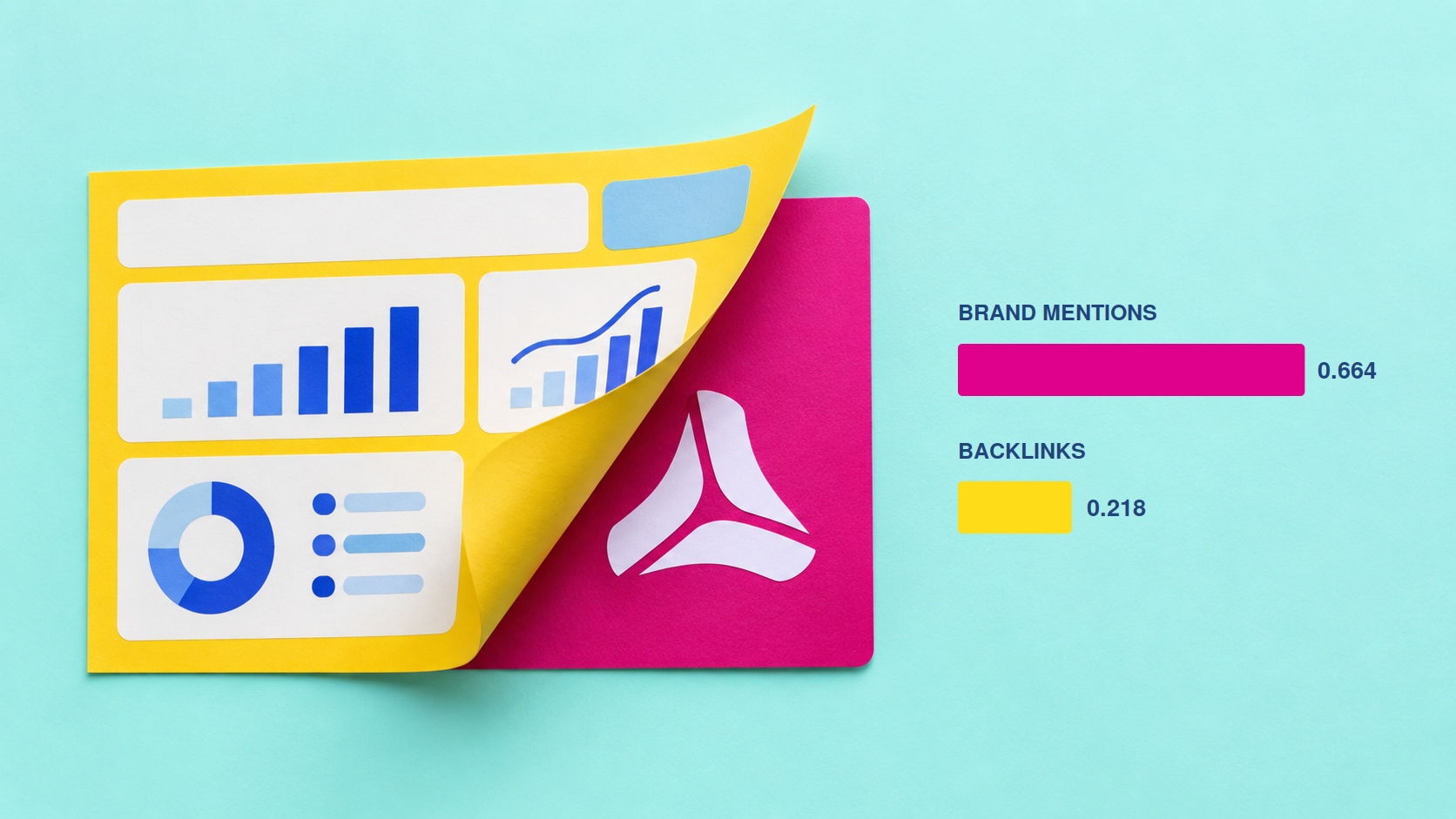
External authority is the most under-invested pillar by brands starting out. "Brand search volume" is the best predictor of AI citation, with a 0.334 correlation according to AirOps (AirOps, 2025). In other words, the more your brand is discussed elsewhere, the more AI cites you. The right page isn't enough: your name must exist in the public conversation LLMs observe.
Three sources concentrate most AI citations across all platforms. Reddit accounts for about 40% of cited sources across all AI engines, while ChatGPT cites Wikipedia in 47.9% of its top sources and Perplexity favors Reddit at 46.7% (Discovered Labs, 2025). Any AI authority strategy starts by mapping its presence on these three structural platforms.
Digital PR targeted at the sources AI reads
Modern Digital PR no longer targets referral traffic but the mention in qualified sources LLMs consult. Sector media, barometers, market studies, rankings, press releases picked up by specialized media. A well-placed mention in a reference article is worth more than an anonymous backlink. Our complete approach: The role of Digital PR in GEO.
Wikipedia and Reddit presence
A well-sourced Wikipedia entry transforms LLMs' perception of your brand in a few weeks. On Reddit, the goal isn't spam, it's existence: the brand must appear in authentic threads where users discuss it. Brands that combine Wikipedia + Reddit + specialized media build what we call "AI authority capital" that's hard to compete with.
Expert quotes and E-E-A-T signals
LLMs extract heavily the blocks in quotation marks attributed to a named expert. "Mentioned + cited" raises by 40% the chances a brand will resurface from one run to another (AirOps, 2025). Featuring identified experts — with bios, photos, LinkedIn links — is a powerful lever. Our deep dive: E-E-A-T and AI, becoming the source cited by generative engines.
Effectiveness of AI optimization techniques — measured visibility gainWhich AI optimization techniques have the most impact% visibility gain in generative engine responsesCombined mention + citationAdded source citationsAdded expert quotationsAdded statisticsAuthoritative factual toneFluency optimizationEasy-to-understandKeyword stuffing (anti-pattern)+40%+37%+33%+22%+12%+5%+3%-10%
Sources: Aggarwal et al. (Princeton, KDD 2024); AirOps Citation Impact Report 2025.
The classic trade-off: 60% of GEO budgets should target strong techniques (citations, quotations, stats, external authority). Brands that invert this priority (keywords, paraphrase, simplification) see stagnation, sometimes regression. For documented case studies, see our case studies page.
Pillar 3 — How to monitor and iterate on your AI visibility?
Monitoring is what separates an AI strategy from a stab in the dark. Only 30% of brands cited by LLMs stay visible from one run to another, which demonstrates the structural volatility of AI citations (AirOps, 2025). Without monthly steering, a brand can disappear from responses without even realizing it. Monitoring isn't a comfort — it's the condition of learning.
Three indicators structure a serious monitoring setup. These metrics don't replace classic SEO KPIs, they complement them.
Cadence matters as much as the metric. Quarterly tracking misses turnarounds. Monthly tracking detects volatility, framing changes, new competitors emerging. For the complete method, see our deep dive Monitoring AI citations, complete guide to steer your visibility.
Our field read. Brands that set up structured monthly monitoring earn on average 2.3x more AI citations in 6 months than those that iterate by instinct. The metric alone doesn't perform miracles, but it forces you to fix what isn't working and amplify what is. Steering by instinct doesn't hold up against LLM volatility.
Tools we use in 2026: Profound, Otterly, AthenaHQ, Peec AI, plus custom monitoring on the most strategic queries. To evaluate your current setup: our free AI audit tools.
How to adapt your strategy to each AI platform?
Each AI engine has its own selection logic and its own favorite sources. Only 11% of domains are cited by both ChatGPT and Perplexity, demonstrating the lack of overlap across platforms (5W Public Relations, 2026). A brand visible on ChatGPT isn't mechanically visible on Perplexity. A serious strategy covers all five platforms but prioritizes based on target audience.
Here's the strategic matrix we recommend to our clients in 2026, by platform.
Google AI Mode was rolled out in Belgium in October 2025 as part of an expansion to more than 40 new countries and 35+ new languages (Google Blog, October 2025), making it the #1 priority platform for brands operating in Belgium. France remains excluded to date, creating a temporary competitive advantage for the multilingual Belgian market.
AI Overviews coverage by sector in 2025-2026AI Overviews coverage by industry in 2025-2026% of queries triggering an AI Overview — 2024 vs 2025 comparisonHealthcareEducationB2B TechRestaurantsE-commerceTravelFinance88%83%82%78%60%50%5%
Source: BrightEdge AI Search Insights 2025-2026, Q4 2025 analysis.
For a platform-by-platform deep dive, read our dedicated guides: How to appear in ChatGPT, How to appear in Perplexity, How to appear in Google AI Overviews, How to appear in Claude AI and our deep dive Google AI Mode, what it changes for your visibility in 2026.
What results to expect at 3, 6 and 12 months?
Results from an AI optimization strategy are measurable faster than those from classic SEO, but they follow a different curve. According to Adobe Analytics, visitors from an AI source convert 31% better than other sources and bounce rate is 33% lower (Adobe Analytics, March 2025). Traffic quality more than compensates for its initially low volume. Here are the benchmarks we observe in our engagements.
At 3 months — First signals
Appearance in sources cited by Perplexity (the most reactive engine), first ChatGPT mentions on niche queries, AI referrer traffic increase of 50 to 200% on an often small base. The brand starts to be "known" to LLMs. At this stage, Share of Model rises on average from 5 to 15% on targeted queries among our clients.
At 6 months — Stable citations
Stabilization of citations on priority queries, appearance in Google AI Overviews on informational queries, first leads attributable to AI traffic. Share of Model generally reaches 25 to 40%. Conversions from AI traffic become significant: per our internal benchmark, ChatGPT visitors convert at 15.9% versus 1.76% for Google organic, 9x better (Search Engine Land, 2025).
At 12 months — Defensive advantage
Reference position in the category, multi-platform citations, self-generated third-party mentions (the brand is cited even where you're not acting), significant and qualified AI traffic. This is when the strategy becomes an asset that's hard for a competitor to attack.
Per our PingPrime 2025-2026 benchmarks. Across 27 brands supported, the average ROI of a 12-month GEO sprint sits between 3.5x and 7x the initial investment, mainly driven by the quality of AI-referred traffic. But the most durable benefit is defensive: brands well established in LLMs are rarely dislodged by a new competitor within 6 months.
For the complete ROI measurement method: GEO ROI, how to measure return on investment in 2026. For concrete cases: How a brand went from invisible to Top 3 in AI responses and +42% AI mentions in 3 months, the IDO method in action.
How to start an AI optimization strategy in 90 days?
A 90-day start is sufficient to produce the first measurable results and install the steering mechanism. Across the 27 GEO sprints run by PingPrime in 2025-2026, 68% of audited brand content is not extractable by LLMs due to inadequate structure, while in 80% of cases the topic is already well covered — just poorly presented. The potential to activate is generally bigger than brands imagine.
Weeks 1-4 — Audit and mapping
Map 50 to 200 priority AI queries, test each query on ChatGPT, Perplexity, Google AI Overviews and Claude, note the brands mentioned, the sources cited and your brand's framing. Audit 20 to 30 strategic pages against citability criteria (Answer-First, Schema, FAQ, sources). Method: GEO Audit, complete guide.
Weeks 5-10 — Redesign and authority
Rewrite the 10 to 20 priority pages in Answer-First format, add FAQPage and Article Schema, embed 5 to 8 sourced statistics per page. In parallel, launch 3 to 5 targeted Digital PR actions on sources LLMs consult (sector media, barometers, expert citations).
Weeks 11-12 — Monitoring and iteration
Set up monthly tracking of the 50 priority queries, configure AI referrers in GA4, define the steering dashboard. First Share of Model report and iteration plan for the next 12 weeks.
If you're starting solo, our free tools page gathers several resources to audit your AI visibility and test your pages. If you prefer to be supported by our team on a structured sprint: see our GEO support offer. For SMBs specifically, see our GEO guide for SMBs.
Frequently asked questions about AI engine optimization
What's the difference between GEO, AEO, AIO and LLMO?
These acronyms largely cover the same reality: adapting a brand's content and presence to a search mode where the synthesized answer replaces the list of links. GEO (Generative Engine Optimization) is the most common term in 2026. AEO (Answer Engine Optimization) stresses the Q&A dimension. AIO and LLMO are variants. Combining these techniques produces an average +40% visibility gain according to Princeton researchers (Aggarwal et al., 2023). For the complete mapping: GEO vs SEO vs AEO in 2026.
Should classic SEO be abandoned in favor of GEO?
No. SEO remains vital for the 40% of searches that still result in a click and for measurable Google Search Console traffic. GEO layers on top to capture visibility in the synthesized answer and in the 60% of zero-click searches. According to Bain & Company, 80% of users rely on AI summaries for at least 40% of their queries. SEO and GEO are the two legs of the same visibility strategy.
Which sectors are most exposed to the AI transition?
AI Overviews coverage reaches 88% in healthcare, 83% in education, 82% in B2B Tech, and 78% in restaurants (BrightEdge, 2025-2026). These sectors see their traditional SEO traffic drop the fastest, but they're also the ones where a well-run AI strategy delivers the quickest returns. Finance remains the least covered (5%) to date, but the trajectory is upward across all industries.
How much does an AI optimization strategy cost for a Belgian SMB?
For a typical Belgian SMB, a starter GEO sprint represents an investment of 8,000 to 25,000 € over 3 months (audit, plan, redesign of 10 to 30 priority pages, initial monitoring). For a large brand or a highly competitive sector, it's more like 30,000 to 80,000 €. ROI is evaluated against AI traffic quality, which converts up to 9x better than Google organic traffic according to Search Engine Land. For SMBs specifically: our complete SMB GEO guide.
Does AI optimization work in French and for Belgium?
Yes. Since the deployment of Google AI Mode in French, Dutch and German in October 2025 (covering Belgium), all AI optimization levers fully work on local queries. With 67% of Belgians using generative AI and 76% of Belgian companies in AI experimentation phase (PwC Belgium, 2025), the Belgian market is as mature as the US market on usage.
Conclusion: AI optimization is now the foundation of visibility
Optimization for AI engines is no longer an exploratory topic — it's the new foundation of a brand's visibility in 2026. The numbers converge. 80% of users rely on AI summaries, 69% of Google searches end without a click, GEO techniques can increase a brand's visibility by +40%. Refusing to invest means letting ChatGPT, Perplexity and Google AI decide alone what your prospects will read about your brand.
The three pillars (content citability, external authority, monitoring) form a stable framework, applicable to brands of all sizes and compatible with your existing SEO. What's left is to execute rigorously, iterate monthly, and accept the natural volatility of LLMs. The strategic window for differentiation closes within the next 12 to 18 months.
To go further: our State of GEO in 2026, trends and predictions, our case studies page showing how brands went from invisible to cited, and our guide to convince your leadership to invest. To discuss a GEO sprint with our team: contact PingPrime.



.svg)
