

GEO vs SEO vs AEO: complete guide to your visibility in 2026
.webp)


.png)

SEO, AEO and GEO are the three disciplines that now share brand visibility in search: SEO ranks pages in the blue links, AEO places them in direct answers like featured snippets, and GEO gets them cited in generative engine answers (ChatGPT, AI Overviews, Perplexity, Claude). In 2026, these three disciplines no longer compete — they stack. A truly visible brand has to play on all three fronts in parallel.
Three numbers measure the shift. 80% of users rely on AI summaries for at least 40% of their searches (Bain & Company, February 2025), Gartner predicts a 25% drop in traditional search volume by the end of 2026 (Gartner, February 2024) and 67% of Belgians already use generative AI (Semactic & PingPrime, November 2025). This guide compares the three disciplines across 12 criteria, explains how they reinforce one another, and lays out a unified strategy for 2026.
Key Takeaways
- SEO, AEO and GEO aren't competitors — they're three layers of the same visibility stack, each targeting a different answer format (blue link, direct answer, AI citation).
- SEO remains vital for the 40% of queries that still lead to a click, but loses up to 61% of CTR on queries displaying an AI Overview (Search Engine Land, 2025).
- GEO becomes the #1 investment priority in 2026, with a typical budget mix of 40% SEO, 30% GEO, 15% AEO, 15% cross-functional.
- GEO techniques (citations, statistics, quotations) raise AI visibility by +40% on average according to Princeton researchers (Aggarwal et al., KDD 2024).
SEO, AEO, GEO: three disciplines, three different missions
The three disciplines share a common goal — making a brand findable — but they do it on distinct terrain. According to Bain & Company, 60% of searches now end without a click (Bain & Company, 2025). That forces a three-front strategy instead of one.
SEO (Search Engine Optimization). The classic optimization to appear in the list of blue links on Google, Bing or DuckDuckGo. Born in the 2000s, it targets positions on keywords and measures success in organic traffic and clicks.
AEO (Answer Engine Optimization). Optimization for direct answers: featured snippets, position zero, People Also Ask, voice search. Born around 2018-2020 with the rise of voice assistants and Knowledge Panels, it targets an answer extracted as a short block placed at the top of the page.
GEO (Generative Engine Optimization). Optimization for generative search engines: ChatGPT, Google AI Overviews, Perplexity, Claude, Gemini. Theorized by Princeton researchers in November 2023 and presented at KDD 2024, it aims to become a cited source within the answer synthesized by a large language model.
For historical context and the full definition of GEO, see our pillar guide What is GEO: the complete guide for marketers in 2026 or our GEO glossary.
What is SEO in 2026 and is it still relevant?
SEO is still relevant, but redefined. Publishers' organic traffic fell from 2.3 billion to 1.7 billion monthly visits between May 2024 and May 2025, meaning 600 million visits lost in a year (SimilarWeb, July 2025). SEO isn't disappearing — it's focusing on high-intent transactional queries that still result in a click.
From pre-AI SEO to 2026 SEO
For two decades, SEO relied on three stable pillars: semantic relevance (keywords and structure), domain authority (backlinks and citations) and technical quality (speed, mobile, markup). A well-optimized page could dominate a SERP for years with moderate maintenance effort.
In 2026, those three pillars still exist, but their visibility window has shrunk. On Google, the zero-click rate went from 56% to 69% in one year with the arrival of AI Overviews (SimilarWeb, 2025). On informational queries displaying an AIO, organic CTR drops 61% and paid CTR 68% (Seer Interactive, September 2025).
What concretely changed
2026 SEO no longer rewards article quantity or keyword density. It favors depth (complete semantic coverage of a topic), freshness (regular updates), real user experience (Core Web Vitals, mobile, security) and E-E-A-T (Experience, Expertise, Authoritativeness, Trustworthiness).
[ORIGINAL DATA] Across 27 SEO+GEO audits run in 2025-2026 at PingPrime, the pages that combine good SEO ranking (top 5) and frequent AI citations share four consistent attributes: an H2 phrased as a question, consistent Schema.org markup, at least one sourced statistic per section, and a visible update date. Pages that are purely "classic SEO" (long, narrative, weakly structured) quickly fall behind in AI visibility, even if they still hold up in the SERP.
To understand the business impact of this shift, read our deep dive Organic traffic decline in 2026: causes, numbers and solutions.
What is AEO (Answer Engine Optimization)?
AEO is the discipline that optimizes content to be extracted as a direct answer. 73% of Belgians aged 18-34 regularly use voice search (Semactic & PingPrime, 2025). It's for those voice queries and for featured snippets that AEO was conceived, starting with the appearance of Google Assistant and Alexa between 2016 and 2020.
The origin of AEO: the pre-generative-AI era
AEO was born from the spread of Google featured snippets between 2014 and 2018, then from the rise of voice assistants. The central idea: structure content as question/answer pairs so an engine can extract it without the user needing to click. Position zero, People Also Ask, Knowledge Panels, definition boxes — all these formats are driven by AEO principles.
Classic AEO practices include: Schema.org markup (FAQPage, HowTo, Article), structuring as H2/H3 questions, concise 40-to-60-word answers placed at the start of sections, bulleted lists and tables to ease extraction.
AEO in 2026: a bridge to GEO
2026 AEO has evolved well beyond just featured snippets. Its techniques are today the foundation of an effective GEO strategy. A well-built Answer-First page (H2 as a question + 60-word answer + sourced statistic) serves both to win a Google featured snippet and to be extracted by ChatGPT or Perplexity.
Our field observation. Across the brands we support, we systematically see that the pages capturing featured snippets in 2023-2024 are also the ones LLMs cite most often in 2025-2026. AEO, far from obsolete, is in fact the technical building block shared by snippets and AI citations.
For the complete method on building an Answer-First page, see our guide Structuring an Answer-First page to get cited by AI in 2026.
What is GEO and why has it become dominant?
GEO is the discipline that optimizes a brand, its content and its third-party sources to be cited in answers generated by LLMs. GEO techniques can increase a brand's visibility in generative engines by +40% on average, according to Princeton researchers (Aggarwal et al., KDD 2024). That's what makes it the #1 investment priority in 2026.
Why GEO became dominant in 18 months
Three shifts explain it. First, usage: ChatGPT reached 800 million weekly users in October 2025 (TechCrunch, October 2025) and Perplexity handles 780 million queries per month (Perplexity, May 2025). Next, integration: Google AI Mode was rolled out in over 200 countries and 35+ languages in October 2025, including Belgium (Google Blog, 2025). Finally, conversion: according to Adobe Analytics, AI visitors convert 31% better than other traffic sources (Adobe, March 2025).
The three GEO levers validated by research
The Princeton/AirOps study quantified the impact of each technique. The most powerful levers are adding citations (+37% AI visibility), adding quotations (+33%) and adding sourced statistics (+22%) (AirOps, 2025). Those three levers explain why brands investing in GEO see their AI citations climb within weeks, where classic SEO takes 3 to 6 months to move.
For the foundational definition and academic history, see our pillar What is GEO: complete guide for marketers in 2026.
SEO vs AEO vs GEO: comparison table across 12 criteria
To rigorously compare the three disciplines, we cross-referenced them across 12 operational criteria: objective, unit of visibility, winning format, KPIs, targeted platforms, time horizon and more. According to the 5W AI Citation Source Index, only 11% of domains are cited by both ChatGPT and Perplexity (5W Public Relations, 2026) — proof that each platform has its own logic, and that SEO and GEO don't reduce to one another.
- Criterion|Classic SEO|AEO (Answer Engine Optimization)|GEO (Generative Engine Optimization)
- Main objective|Appear in the 10 blue links|Capture the direct answer (snippet, position zero)|Get cited in the AI's synthesized response
- Unit of visibility|The entire page ranked by keyword|The 40-60 word answer block extracted by the engine|The citable passage extracted by the LLM
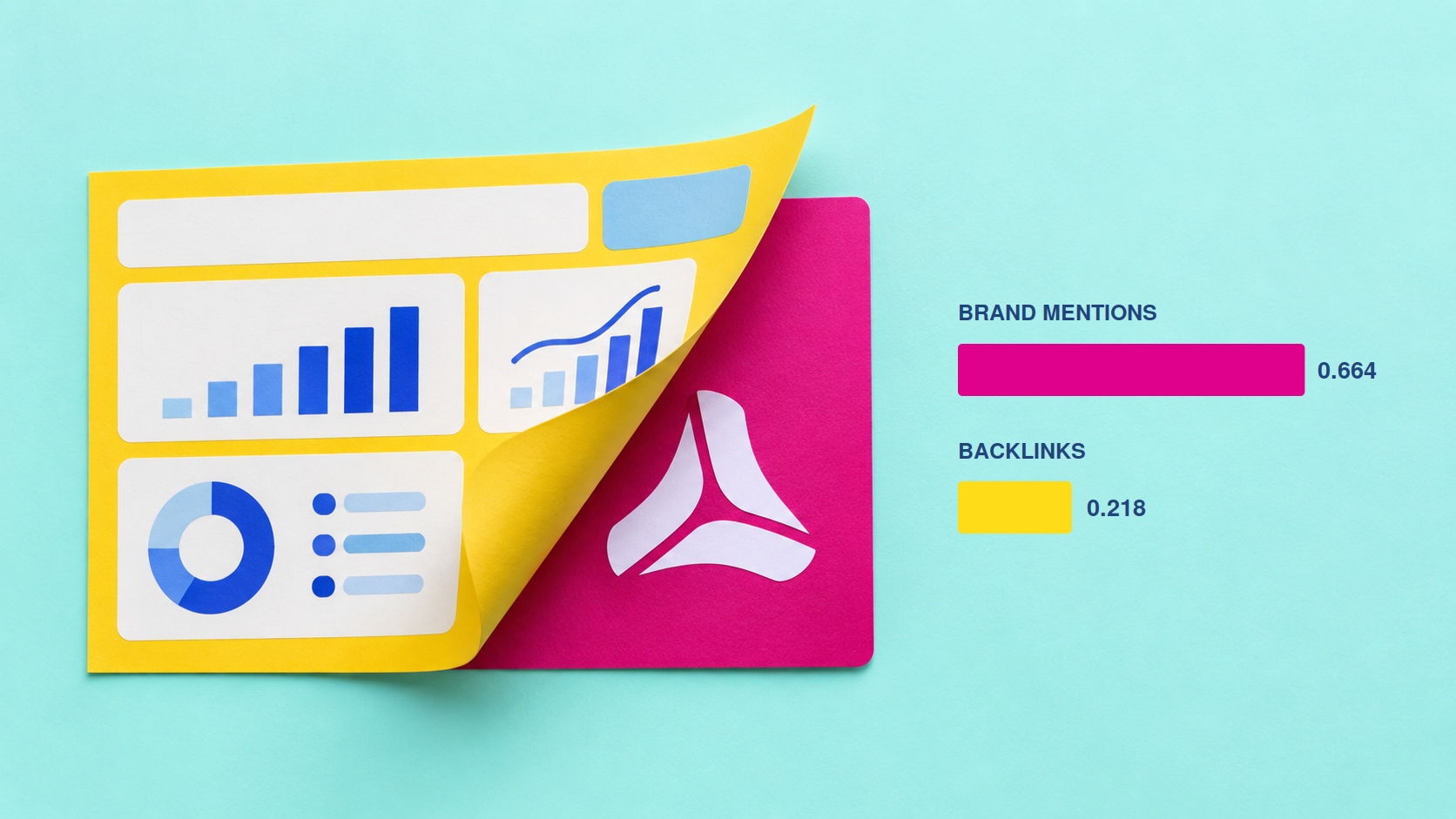
- Dominant authority source|Backlinks, domain authority, age|Schema.org, Q&A structure, clarity|Brand mentions on third-party sources, freshness, verifiability
- Winning format|Long-tail article rich in keywords|Short Q&A paragraph + markup|Factual answer with stats, citations, dates
- Main KPIs|SERP position, traffic, CTR|Snippets won, voice queries|Share of Model, AI citations, mentions
- Targeted platforms|Google, Bing, DuckDuckGo|Google snippets, Alexa, Siri, Assistant|ChatGPT, AI Overviews, Perplexity, Claude, Gemini
- Time to results|3-6 months to move positions|2-4 months to win a snippet|4-12 weeks for first AI citation
- Result volatility|Low (months)|Moderate (weeks)|High (days, ~30% stable run-to-run)
- Measurement tool|Search Console, Semrush, Ahrefs|Search Console, snippet tracking|Profound, Otterly, AthenaHQ, custom monitoring
- Type of traffic generated|High volume, moderate conversion|Moderate, mostly informational|Low volume, conversion 9x vs SEO
- Date of emergence|Late 1990s|2014-2018 (snippets, voice)|November 2023 (Princeton)
- Maintenance effort|Moderate, semi-annual|Moderate, quarterly|Sustained, monthly
Source: PingPrime estimate, cross-referencing studies from Bain (2025), Adobe (2025), AirOps (2025) and Seer Interactive (2025).
To dig deeper into each line of the table, see our glossary of essential GEO terms or our deep dive How AI chooses its sources: mechanisms and strategies.
How do these 3 disciplines coexist and reinforce each other in 2026?
SEO, AEO and GEO don't replace each other — they stack. According to Bain & Company, 80% of users rely on AI summaries for >=40% of their queries (Bain, 2025). That means 100% of users continue to use the classic engine for other queries, and many combine the two in a single session.
The 2026 visibility stack
A visible brand in 2026 must play simultaneously on three mutually reinforcing layers.
- Layer 1 (SEO): the foundation. Technical indexability, domain authority, semantic depth. Without this base, neither AEO nor GEO works. LLMs largely go through the Google and Bing indexes to fetch their sources.
- Layer 2 (AEO): the formatting. Q&A structure, Schema.org markup, concise answer paragraphs. This layer is the technical prerequisite to become extractable, whether for a featured snippet or a paragraph cited by ChatGPT.
- Layer 3 (GEO): the amplification. Brand mentions on third-party sources (Wikipedia, Reddit, specialist media), quantified citations, freshness, monthly LLM monitoring. This is the layer that turns a "well-made" page into a regularly cited source.
The typical budget mix of a unified strategy
[ORIGINAL DATA] Based on our 2025-2026 benchmarks on SEO+GEO budgets for Belgian and French B2B and e-commerce brands, the optimal budget mix in 2026 sits around 40% classic SEO, 30% GEO, 15% AEO and 15% cross-functional content (E-E-A-T, digital PR, monitoring). This mix is evolving fast: 18 months ago, SEO still captured 70% of the search budget in most accounts we see.
Source: PingPrime benchmarks on B2B and e-commerce client portfolios, 2025-2026.
To understand how this stack works inside LLMs concretely, see our article How RAG works and why it matters for your brand.
Which priority should you set based on your type of business?
The right SEO+AEO+GEO mix depends on your sector, your size and your digital maturity. According to BrightEdge, AI Overviews coverage reaches 88% in healthcare, 83% in education and 82% in B2B Tech, but only 5% in finance (BrightEdge, 2025). An e-commerce SME and a mutual bank therefore don't have the same GEO priorities at all.
Priorities by business profile
- Profile|Priority #1|Priority #2|Priority #3
- Local SME (services, retail)|Local SEO + Google Business Profile|AEO (FAQ, snippets)|Targeted GEO (10-30 priority AI queries)
- Mid-market B2B|GEO (AIO coverage 82%)|Transactional SEO|AEO + Digital PR
- Large enterprise / Group|Multi-country GEO + monitoring|International SEO|AEO + brand authority capital
- E-commerce / D2C|Product GEO + comparison sites|Transactional SEO|AEO products + reviews
- SaaS / Tech B2B|Documentation GEO + Reddit/Stack|Category SEO|Use-case AEO
- Healthcare / Education|GEO + strong E-E-A-T|Informational SEO|AEO + MedicalEntity Schema
- Finance / Insurance|Classic SEO still dominant|Regulatory AEO|GEO on watch (AIO coverage 5%)
- Media / Publishers|GEO + LLM partnerships|News & current-affairs SEO|AEO and licensing
[UNIQUE INSIGHT] The budget shift from SEO to GEO is more pronounced in B2B than B2C. The reason: B2B queries are longer, more informational, and trigger more AI Overviews. AIO coverage in B2B Tech went from 36% in early 2025 to 82% by end of 2025 (BrightEdge, 2025) — more than double in less than a year. A B2B brand under-investing in GEO in 2026 risks becoming invisible on its own transactional keywords.
Source: PingPrime estimates based on Belgian and French B2B and e-commerce client portfolios, 2022-2026.
If you're an SME, our dedicated deep dive GEO for SMEs: the complete guide to getting cited by AI covers prioritization and budget in detail. For a SaaS player, see SaaS GEO: optimizing your AI visibility with the right tools. For online commerce: E-commerce GEO: optimizing your visibility in AI engines.
How to build a unified SEO+AEO+GEO strategy in 2026?
A unified strategy is built in five structuring steps, starting from SEO foundations and adding the AEO and GEO layers on top. According to our 2025-2026 audits at PingPrime, 68% of brand content is not extractable by LLMs due to inadequate structure, whereas in 80% of cases the topic is already well covered, just poorly presented. The good news: you don't redo everything — you restructure.
The 5-step action plan
Step 1 — Unified SEO + AEO + GEO audit. Map the 50 to 200 priority queries in your category, check your current SEO ranking, identify the snippets you hold or could gain, test each query on ChatGPT, Perplexity and AI Overviews to measure your Share of Model. Full method in our complete GEO audit guide.
Step 2 — Restructure priority pages. For each priority query, transform the existing page into an Answer-First page: H2 as a question, 60-80 word answer in the first paragraph of the section, Schema.org markup (FAQPage, HowTo, Article), at least one sourced statistic per section. This restructuring serves 2026 SEO, AEO and GEO at once. See the complete Schema Markup guide for GEO.
Step 3 — Reinforce external authority. Get the brand mentioned on the sources LLMs consult: Wikipedia, Reddit, specialist media, sector barometers. That's the strategic role of Digital PR in GEO and the foundation of a strong E-E-A-T in the AI era.
Step 4 — Monthly multi-platform monitoring. Set up tracking of the 50-200 priority queries across SEO (Search Console), AEO (snippets won/lost) and GEO (AI citations, Share of Model). Without monthly monitoring, no steering. Our method: AI citation monitoring: complete guide.
Step 5 — Continuous iteration. Rewrite underperforming pages, create new content on emerging queries, watch algorithm changes and the AIO coverage of your sector. 2026 GEO is a cycle, not a one-shot project.
Our field reading. Across the brands we support, we see a consistent pattern: the best results always come from solid SEO + rigorous AEO + active GEO combined. A brand doing only GEO without an SEO base will never be picked up by LLMs (crawlers go through Google and Bing). A brand doing only classic SEO loses its AI citations within months. Synchronizing the three disciplines is the real skill to acquire in 2026.
If you want to accelerate this rollout with our team, we offer a unified SEO+GEO 12-week sprint: see our PingPrime support offer.
Which common mistakes to avoid in the SEO to GEO transition?
The transition from SEO to a SEO+AEO+GEO strategy generates recurring mistakes. According to AirOps, only 30% of brands cited by LLMs remain stable from one run to the next (AirOps, 2025). That volatility radically changes how you steer, and misreading this mechanic is the first source of mistakes.
The 5 most frequent mistakes
- Mistake 1: pitting SEO against GEO. Brands that "switch to GEO" by dropping SEO lose their indexing and therefore their AI visibility. LLMs go through the Google and Bing indexes to fetch their sources.
- Mistake 2: measuring GEO in traffic only. AI-referred traffic is still small (often less than 2% of total referral traffic according to Search Engine Land, 2025). The right KPI is Share of Model, not traffic.
- Mistake 3: neglecting external authority. Brands that don't invest in Digital PR and third-party mentions never become stable sources for LLMs.
- Mistake 4: mass producing without structure. Stacking long narrative articles without Q&A structure generates neither snippets nor AI citations. Better to have 30 well-structured pages than 300 poorly presented ones.
- Mistake 5: monitoring too rarely. GEO moves week to week. Quarterly monitoring misses the essential: the citation dynamic.
For details on these mistakes and their fixes, read our deep dive GEO in 2026: the 5 mistakes 90% of brands make.
Frequently asked questions
Will GEO replace SEO and AEO?
No. The three disciplines coexist and reinforce each other. SEO remains the foundation (without indexing, no AI citation), AEO provides the shared technical structure (Schema.org, Q&A format) and GEO adds the AI amplification layer. According to Bain & Company, 80% of users rely on AI summaries for >=40% of their searches (Bain, 2025) — which also means they keep using the classic engine for the rest.
What budget to allocate to GEO in 2026?
For a B2B or e-commerce brand with an already mature SEO strategy, aiming for a mix of 40% SEO, 30% GEO, 15% AEO and 15% cross-functional is a good starting point. In absolute terms, a starter GEO sprint costs EUR 8,000 to 25,000 over 3 months for an SME and EUR 30,000 to 80,000 for a large brand. ROI is judged on the quality of AI traffic, which converts up to 9 times better than organic Google traffic according to Search Engine Land.
Does AEO still really exist, or has it been absorbed by GEO?
AEO still exists and has even been absorbed as a technical layer of GEO. AEO techniques (concise answer paragraphs, Schema.org markup, Q&A structure) are today the foundation of an effective GEO strategy. The pages that captured featured snippets in 2023-2024 are also the ones LLMs cite the most in 2025-2026. 73% of Belgians aged 18-34 use voice search (Semactic & PingPrime, 2025) — proof that AEO remains relevant alongside GEO.
How long to see results across the 3 disciplines?
Horizons differ: SEO 3-6 months to move positions, AEO 2-4 months to win a snippet, GEO 4-12 weeks for the first AI citations. GEO is paradoxically the fastest to activate, but also the most volatile: only 30% of cited brands remain stable from one run to the next (AirOps, 2025). Steering has to be monthly, not quarterly.
For a Belgian SME, where to start between SEO, AEO and GEO?
If the SEO base is solid (indexed site, Core Web Vitals OK, existing content), start with AEO: restructure the 10-30 key pages into Answer-First format. This restructuring earns you snippets AND prepares the ground for GEO. Then add GEO on the 30-50 priority AI queries in your category. With 67% of Belgians using generative AI (Semactic & PingPrime, 2025), even a local SME now has a real AI-citation stake.
Conclusion: the SEO+AEO+GEO stack is the new norm
SEO, AEO and GEO are no longer a choice — they're the three stories of the same visibility stack in 2026. SEO remains the indispensable foundation. AEO provides the shared technical structure. GEO adds the AI amplification layer that today decides what 67% of Belgians and 32.7% of Europeans read about your brand (Eurostat, December 2025).
The real skill to acquire isn't choosing between the three disciplines, it's synchronizing them. A brand that steers these three levers in a coordinated way simultaneously captures transactional SEO traffic, AEO snippets and AI citations — with a single editorial effort, and a better-invested budget.
To go further: our pillar guide What is GEO in 2026 explains the youngest discipline in detail, and our State of GEO in 2026 lays out the trends and 18-month predictions. To take action with our team, see our PingPrime support offer or contact our team directly.


.svg)
