

The 10 GEO Terms Every CMO Must Know in 2026


.png)

Digital marketing vocabulary flipped in two years. GEO, RAG, Share of Model, citation capsule, AI framing: terms no one mentioned in executive committees in 2023, and which now structure the budget trade-offs of visible brands. 67% of Belgians already use generative AI and 36% have made a purchase decision based solely on an AI recommendation (Semactic & PingPrime study, November 2025). This article condenses for CMOs the 10 terms to master in order to decide, arbitrate, and challenge their teams in 2026.
The bottom line
- GEO (Generative Engine Optimization) is the new discipline of visibility in AI engine responses.
- Gartner forecasts a 25% drop in traditional search volume by the end of 2026 (Gartner, February 2024): the decision to invest in GEO is no longer up for debate, only its execution pace is.
- Ten terms structure strategic conversations in 2026: GEO, AEO, citability, RAG, Share of Model, AI framing, citation capsule, AI Overviews, authority capital, and the IDO method.
- Mastering this vocabulary lets you challenge teams, choose a provider, and arbitrate budgets without relying on a consultant.
Why must a CMO master GEO vocabulary in 2026?
Because budget trade-offs are now made in GEO language. According to Gartner, traditional search engine volume will drop 25% by the end of 2026 under the impact of chatbots and AI agents (Gartner, February 2024). A CMO still talking only "SEO" and "SEA" to their CEO in 2026 takes a measurable strategic lag, and loses the ability to steer the marketing budget toward the right levers.
The signal on the Belgian consumer side is even clearer. 36% of Belgians have already made a purchase decision based solely on an AI recommendation (Semactic & PingPrime, November 2025). What ChatGPT or Google AI says about your brand now weighs as much as your website. Mastering ten terms is enough to take back control of these strategic conversations.
Our field observation. Across the executive committees where we've stepped in since 2024, the most effective CMOs are not those who master GEO's technical details: they're the ones who share a precise vocabulary with their teams and providers. Three poorly understood words in a meeting, and a €60,000 GEO budget turns into "content optimized for ChatGPT" with no plan, no monitoring, and no measurable ROI.
This article complements our complete GEO glossary, which details over 40 operational terms. Here, we stay on the 10 strategic terms a CMO must be able to handle in a meeting without notes.
The 10 essential GEO terms for deciding in 2026
Here's the selection. Each term is defined in CMO language, with a data point to understand the stakes and a link to a resource to dig deeper. The order is intentional: it follows the logic of an AI visibility strategy, from general concept to operational tools.
1. GEO (Generative Engine Optimization)
The GEO is the discipline of optimizing a brand, its content, and its sources to be understood, retained, and cited by generative search engines: ChatGPT, Google AI Overviews, Perplexity, Claude, Gemini. Where SEO targets a ranking among ten blue links, GEO targets existence within the synthesized response the AI offers the user.
According to the Princeton researchers behind the concept, applying GEO techniques can boost a brand's visibility in generative engines by an average of +40% (Aggarwal et al., KDD 2024). It's the umbrella term covering all strategic arbitration. For the exhaustive definition, see our complete GEO guide for marketers in 2026.
2. AEO (Answer Engine Optimization)
The AEO is optimization for "answer engines": ChatGPT, Perplexity, Claude, AI Overviews, which return a single answer rather than a list of links. The term predates GEO and is still used, sometimes as a synonym, sometimes as a more tactical sub-discipline (focused on Q&A, FAQ, semantic structuring).
For a CMO, remember one thing: 60% of searches now end without a click (Bain & Company, February 2025). AEO is what helps you exist on these 60% silent searches. Subtle differences with GEO and SEO: see our deep dive GEO vs SEO vs AEO.
3. Citability
The citability measures a content's ability to be extracted and cited by an LLM in its response. Citable content directly answers a question, in under 80 words, in the first paragraph of a section, with a data point and a named source. LLMs extract these blocks the way you cut a stamp from a sheet.
According to a 2025 AirOps study, adding citations to content increases its AI visibility by 37% and adding statistics by 22% (AirOps, 2025). Citability is the #1 editorial KPI of a GEO strategy. Method applied in our guide Structuring an Answer-First page to be cited by AI.
4. RAG (Retrieval-Augmented Generation)
The RAG is the mechanism by which an LLM fetches external documents in real time (web pages, knowledge bases) before composing its answer. It's what allows ChatGPT, Perplexity, or AI Overviews to cite fresh sources rather than relying solely on their frozen training. Without RAG, no citation is possible: your brand is invisible.
For a CMO, understanding RAG means understanding why content freshness weighs so much. On Perplexity, content less than 30 days old earns 3.2x more citations (Discovered Labs, 2025). To dig deeper: How RAG works and why it matters for your brand.
5. Share of Model
The Share of Model is the AI equivalent of advertising "share of voice." It's the share of times your brand is mentioned by LLMs on the strategic queries in your category. If "best GEO agency Belgium" is queried 100 times on ChatGPT and your brand appears 23 times, your Share of Model is 23%.
It's the most important steering KPI for a CMO in 2026. Yet only 30% of brands cited by an LLM remain so from one run to the next (AirOps, 2025). Without monthly Share of Model monitoring, no serious GEO steering. More details in our complete AI citation monitoring guide.
6. AI framing
The AI framing refers to how LLMs spontaneously describe your brand in their responses: perceived positioning, attributes cited, competitors associated, tone used. Two brands can have an identical Share of Model but radically opposite framing: one described as "innovative and premium," the other as "entry-level."
For a CMO, framing is the closest equivalent to classic "brand health," AI edition. According to McKinsey, 76% of Belgian companies are experimenting with or piloting AI (PwC Belgium, 2025): that many opportunities for your B2B prospects to query an LLM before reaching out to you. See GEO and branding: how AI shapes the perception of your brand.
7. Citation capsule
A citation capsule is a 40-80 word content block, self-sufficient, containing a strong claim, a data point, and a named source — designed to be extracted as-is by an LLM. It's the modern writing unit for GEO. Where SEO produced "pages," GEO produces "citable capsules" nested within pages.
A serious GEO strategy targets at least one citation capsule per H2 section. According to Princeton researchers, passages simultaneously containing citations + statistics see their extraction by LLMs increase by up to +40% (Aggarwal et al., KDD 2024). It's the editorial production unit that changes a blog's ROI.
8. AI Overviews
The AI Overviews (AIO) are summaries generated by Google that appear at the top of result pages. They are powered by Gemini and combine traditional search and AI synthesis. For the vast majority of B2B and consumer brands, it's now the #1 AI channel by volume.
According to BrightEdge, AIOs now appear on 48% of tracked queries, with peaks at 88% in healthcare, 83% in education, and 82% in B2B Tech (BrightEdge, 2025-2026). Belgium rollout dates to October 2025. Practical method to position yourself: How to appear in Google AI Overviews.
9. Authority capital
The authority capital is the stock of external signals that make a brand credible to LLMs: Wikipedia mentions, citations in established media, presence on Reddit, verifiable customer testimonials, sector barometers, academic citations. Unlike SEO backlinks, authority capital is multi-format and multi-source.
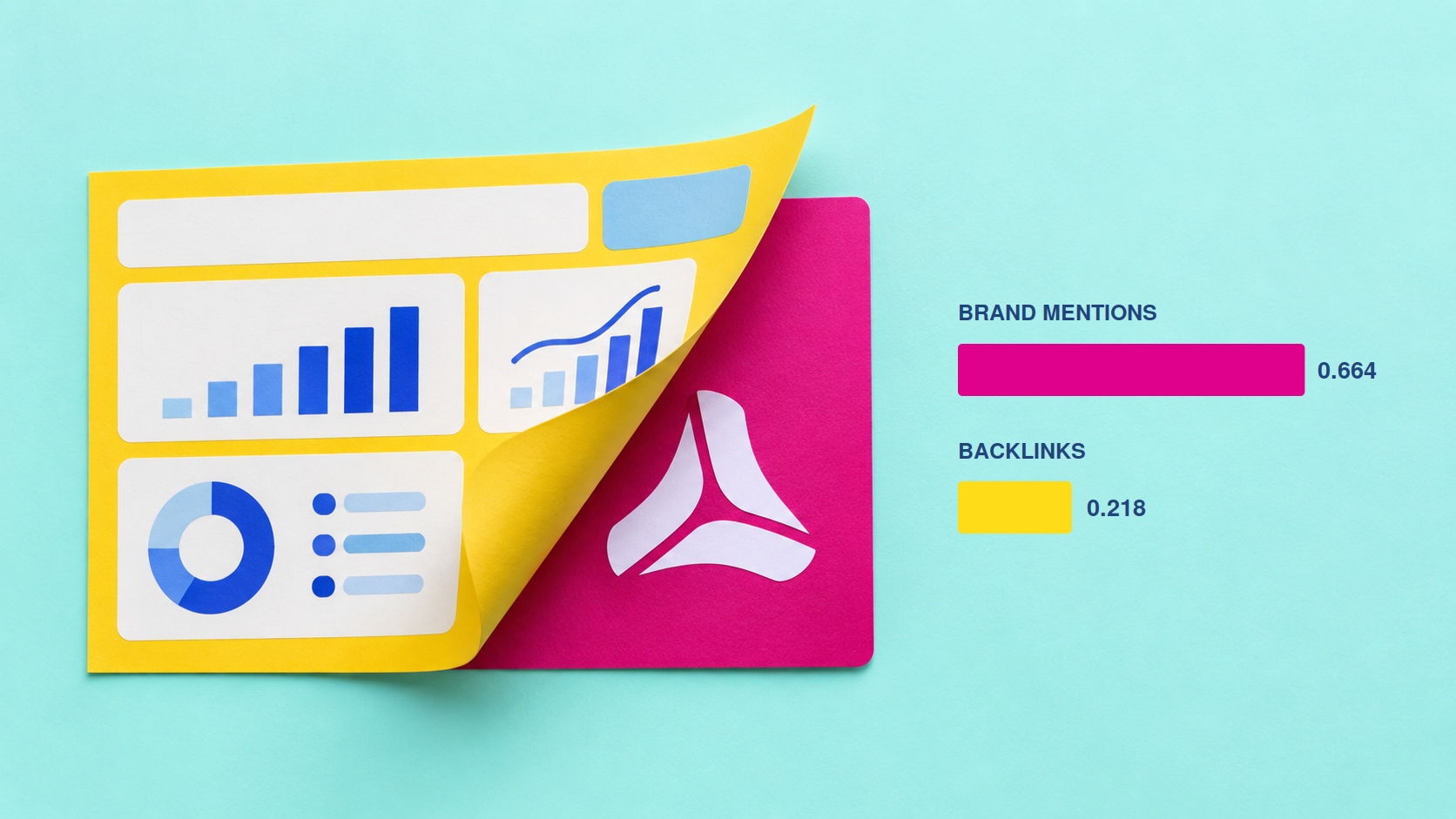
It's GEO's long-term lever. Brand search volume is the single best predictor of AI citations, with a correlation of 0.334 (AirOps, 2025): non-AI brand awareness remains the best lever for AI citations. Concept detailed in Stop chasing AI mentions, build authority capital.
10. IDO method
The IDO method is the GEO execution framework we formalized at PingPrime, structured in three phases: Identify priority AI queries, Detect current framing and citability gaps, Optimize through capsule rewrites, Schema markup, and external authority reinforcement. It's an operational framework that makes GEO actionable rather than incantatory.
On one of our flagship missions, applying the IDO method generated +42% AI mentions in three months, with Share of Model rising from 8% to 31% on category queries. Full details and benchmarks in our case study +42% AI mentions in 3 months: the IDO method in action.
Our field read. Across the 25+ brands supported in 2025-2026, the term that creates the most friction in executive committees is neither GEO nor RAG: it's Share of Model. Because it forces acceptance that we no longer measure traffic, but a presence in responses. It's a mindset shift the most advanced CMOs make in two months, and the others take a year to digest. Mastering the vocabulary accelerates this shift.
How to integrate these 10 terms into your strategy in 90 days?
Vocabulary mastery is a prerequisite, not an end. The challenge for a CMO is operationalizing these ten terms into a concrete action plan. According to Statbel, 34.5% of Belgian companies use AI in 2025, up from 13.8% in 2023 (Statbel, 2025): brands starting their GEO in 2026 will already find competitors established in AI responses. Here's a four-week condensed plan.
Weeks 1-2 — Map your priority AI queries. List 50 to 200 questions your customers actually ask LLMs in your category. Test each on ChatGPT, Perplexity, AI Overviews. Note who is cited, how you are described (framing), and which sources the LLMs consult. It's the foundation of any serious strategy.
Weeks 3-6 — Audit citability and framing. For each important page on your site, check the presence of citable capsules (40-80 word answer, sourced statistic, expert citation). Measure the initial Share of Model on your top 50 queries. Our complete method: GEO Audit: complete guide to assessing your AI visibility.
Weeks 7-10 — Rewrite priority pages in answer-first logic. Restructure 10 to 30 key pages following citation capsule logic. Add Schema markup (FAQPage, Article, Organization). See our complete Schema Markup guide for GEO.
Weeks 11-13 — Reinforce external authority capital. Work on Wikipedia mentions, media sources, sector barometers, verifiable customer testimonials. Implement monthly Share of Model monitoring. To save time, our team offers a 12-week GEO sprint covering the entire scope.
Frequently asked questions
What are the three GEO terms to master first?
If you should remember only three terms: GEO (the discipline), citability (the editorial KPI), Share of Model (the steering KPI). With these three words, you can challenge any provider and arbitrate a budget. Knowing that 60% of searches end without a click in 2025 (Bain & Company, 2025), these three terms drive budget trade-offs.
Does GEO also concern B2B brands in Belgium?
Particularly so. AI Overviews appear on 82% of B2B Tech queries (BrightEdge, 2025) and Gartner predicts 90% of B2B purchases will be intermediated by AI agents by 2028 (Gartner, November 2025). For Belgian B2B brands, not existing in LLM responses in 2026 is like not existing on LinkedIn in 2018.
Should classic SEO be abandoned in favor of GEO?
No. The two disciplines layer on top of each other. LLM traffic represents less than 2% of total referral traffic on average (Search Engine Land, 2025), so SEO remains vital for volume. But its quality changes the game: ChatGPT visitors convert at 15.9%, versus 1.76% for organic Google, a ratio of 9 to 1. A CMO arbitrates, doesn't choose.
How long does it take a CMO to master this vocabulary?
From our experience across the 50+ executive committees we've stepped into since 2024, two to three hours of training are enough for the ten terms in this article. True mastery comes after, in 4 to 8 weeks of practice in meetings. With 67% of Belgians using generative AI (Semactic & PingPrime, 2025), learning time is trivial compared to the stakes.
Conclusion: vocabulary precedes strategy
Mastering these ten terms is not a stylistic exercise. It's the prerequisite for challenging a provider, arbitrating a budget, briefing an internal team, and defending a GEO investment in front of an executive committee. CMOs still talking only "SEO," "SEA," and "content" in 2026 hand over their arbitration capability to their providers.
The numbers converge: 67% of Belgians use generative AI, 36% buy based on AI recommendations, Gartner forecasts -25% traditional searches by the end of 2026. GEO vocabulary is now as central for a CMO as "CTR" or "ROAS" were ten years ago. To go beyond these ten terms, consult our complete GEO glossary and our GEO pillar guide for 2026. To move to execution, our team offers a 12-week GEO sprint or a free scoping session via our contact page.



.svg)
