

ChatGPT Atlas and the shift from search to delegation


.png)
By Sabrina Bulteau PingPrime.ai
A Silent Revolution in the Way We Browse the Web
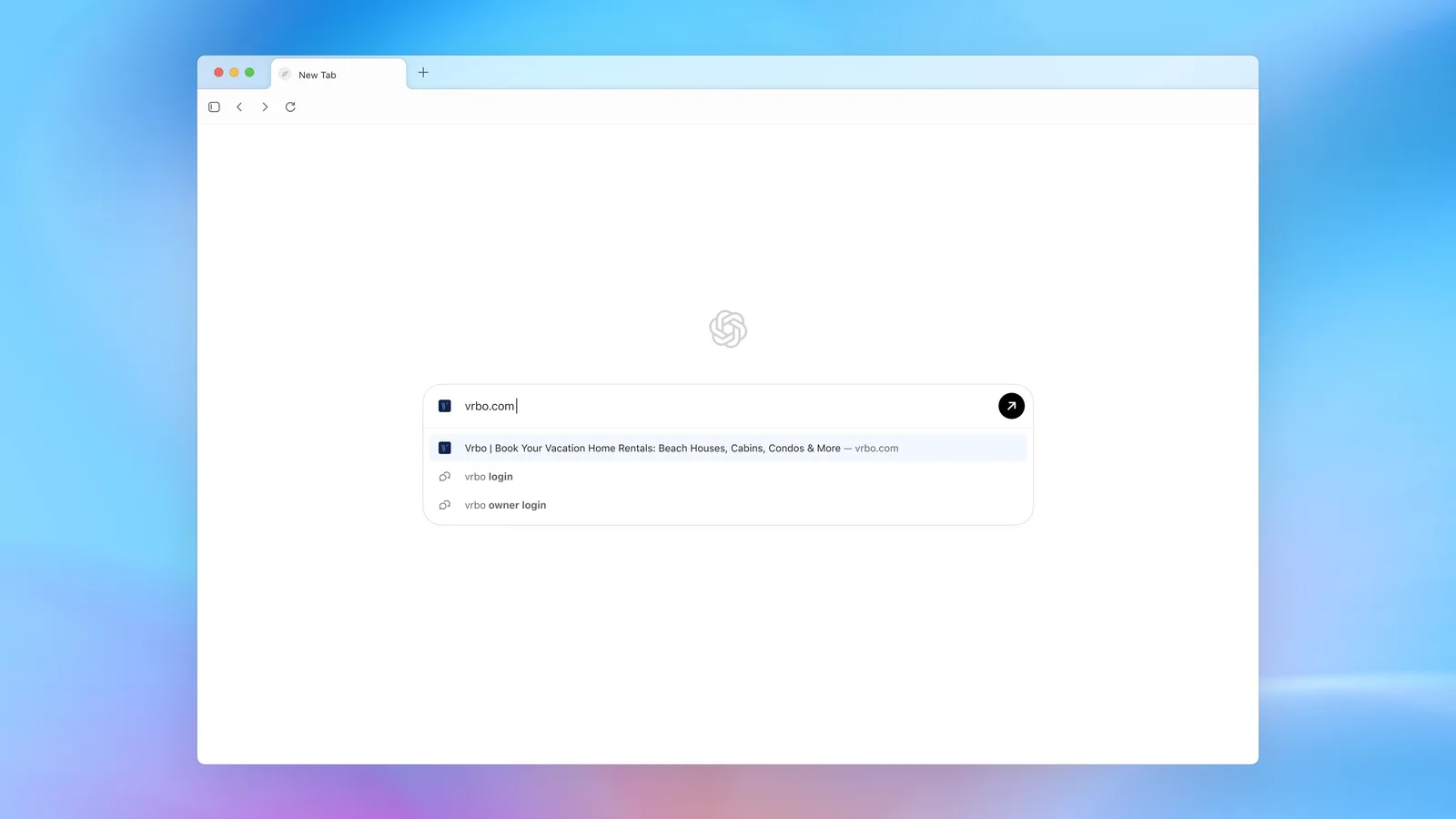
In October 2025, OpenAI launched ChatGPT Atlas, a browser that doesn't just show the web, it acts on it. Built on Chromium, Atlas integrates an AI agent at its core. For the first time, browsing and intelligence merge into one continuous experience. Users no longer type queries, click on links, and interpret results. They simply ask, and the agent understands, searches, summarizes, and executes. This isn't just a usability upgrade. It's a fundamental shift: from search to delegation.
From Exploration to Delegation
In the traditional model, the web was a landscape of choices. Users decided where to go, and brands fought for visibility. Atlas completely changes that dynamic. When an AI mediates every step, from query to action, the interface becomes the decision-maker.
Your website, your content, your SEO ranking, they still exist, but they are now filtered through an AI lens. The assistant interprets your relevance, not the user.
This is what we call the AI-mediated web: a web where attention flows not through search results, but through agents acting on behalf of users.
The New Architecture of Trust
For businesses in Europe and Belgium, this means the challenge shifts from visibility to readability. It's no longer enough to be found; you must be understood, trusted, and actionable by an AI.
This requires:
✅ Structured and Contextual Content that can be parsed and summarized by language models.
✅ Clear Value Signals, price, credibility, usefulness, easy for AI to interpret and rank.
✅ Consistent Narratives, your brand story must be coherent across every touchpoint so AI can confidently recommend you.
In short: your digital presence must now be AI-readable.
Convenience Meets Control
Atlas is built for transparency. Its Agent Mode lets ChatGPT act on websites, retrieve information, and even perform actions on your behalf.
But this convenience comes at a cost. Atlas continuously collects behavioral signals, not just what users click, but what they consider.
As critics point out, this marks a shift from passive data collection to behavioral mapping. The assistant anticipates you, but it also profiles you.
The result is a new trade-off: users gain cognitive comfort, but give up a degree of autonomy and transparency.
The "Anti-Web" Dilemma
By consolidating browsing, conversation, and action into its AI layer, Atlas could gradually bypass the open web.
Commentators are already describing it as "anti-web by design":
- fewer websites visited directly,
- less source diversity,
- more dependence on a single ecosystem, OpenAI's.
This raises important strategic questions for brands:
- What happens when users stop "visiting" your site?
- How do you reach audiences mediated by an AI interface?
- What does "traffic" even mean in a world of delegated browsing?
The answer may lie in integration rather than resistance. Brands that design AI-compatible ecosystems, through APIs, structured data, and conversational clarity, will remain visible even when the user no longer browses.
The Business Opportunity Behind the Shift
Despite the concerns, the emergence of Atlas opens up extraordinary possibilities for businesses that adapt early.
When the interface becomes conversational:
- You meet customers where they ask, not where they search.
- You shorten the distance between curiosity and conversion.
- You build trust through interaction, not exposure.
The real competitive edge will come from mastering the AI interface layer, designing content, data, and services that assistants can smoothly interpret and activate.
It's not about beating the algorithm. It's about collaborating with it.
From Search to Symbiosis
ChatGPT Atlas marks a turning point. It signals the end of the open, link-based web as our primary mode of discovery, and the beginning of an AI-assisted internet, where interaction flows through intelligent intermediaries.
For users, it means simplicity and speed.
For businesses, it means learning to communicate not only to humans, but through the machines that understand human intent.
At PingPrime, we believe this shift is an invitation, to create digital experiences that are more intuitive, transparent, and genuinely customer-centric. Because if the web becomes a conversation, the brands that win will be those who know how to speak, clearly, usefully, and with purpose.
About Sabrina Bulteau
After more than two decades shaping the digital world by co-founding Be Connect, one of Belgium's first social media agencies, Sabrina Bulteau is now co-founder of PingPrime.ai. She pioneers Generative Engine Optimization (GEO) to help brands, institutions, and media become the trusted reference that generative AI systems retrieve, cite, and recommend. Her goal: navigate the AI Search Shift and help organizations move from visibility to narrative authority, so they're not just found, but believed and chosen. No fluff. Just impact.
e.e



.svg)
